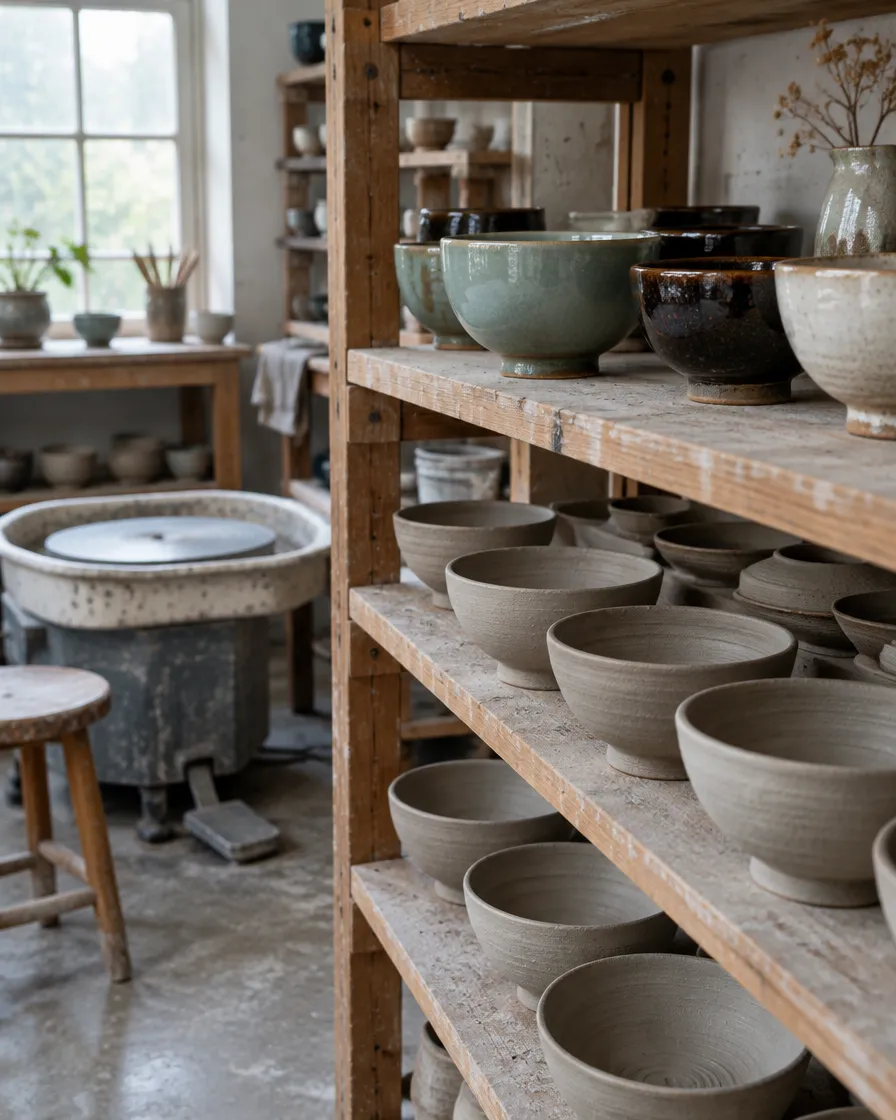
Inês makes bowls by hand, and each one is worth six slow weeks. Online they looked like souvenirs. This is how her website learned to show their value, and her warmth.
Inês is 41 and left a career in accounting to work with clay. She throws stoneware bowls barefoot in a small studio near Porto, burns incense while she works, and fires her kiln around every full moon. People who visit the studio stay for tea and rarely leave with just one piece.
“People say my bowls are beautiful in person. Online, they just scroll past.”
Her website was a shop template: a sale banner, a grid of square photos, an "Add to cart" under each one. Under flat light, a bowl with a glaze that changes from green to rust looked like a grey circle. Nothing said who made it or why it took six weeks.
Before: eight identical squares, a discount and a cart.
Three conversations with Inês, and a morning watching visitors in her studio. Beneath the request for "a nicer shop", three things came up.
Every bowl is a little ritual you can hold.
This one sentence became the brand. Every design decision afterwards was checked against it: does this feel like holding a warm bowl, or like browsing a catalogue?
Before any colour or letter, I described Inês as a person. Every option was then held up against her: would she recognise herself, and would a buyer feel the value of six slow weeks?
“Every bowl gets a quiet blessing before it goes into the kiln.”
Her world
Incense in the studio · bare feet at the wheel · full-moon firings · marigolds on the windowsill · a kitchen full of friends
Cosy, but too playful. It looked like a café menu, and suddenly €80 for a bowl felt expensive.
Tasteful and calm, but cool. It felt like a museum shop, not like her studio on a sunny morning.
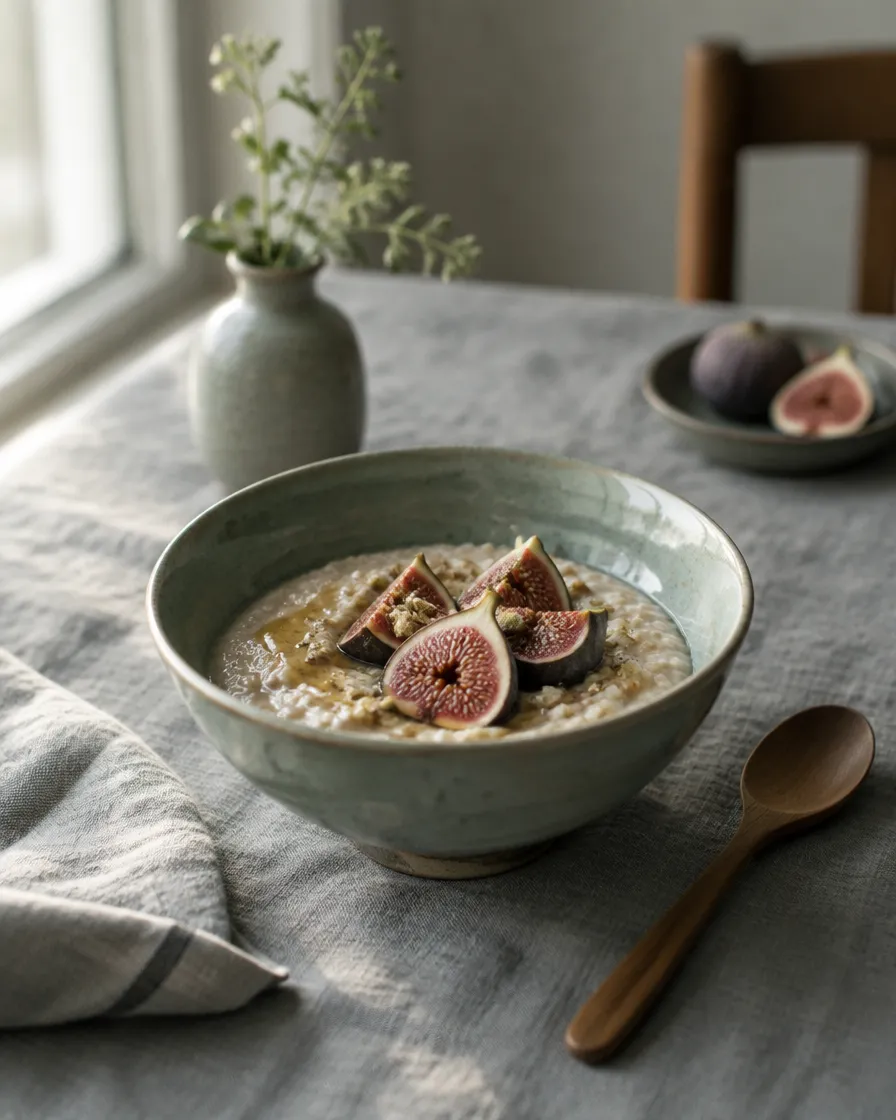
Taken straight from the photographs: linen tablecloths, morning light, the celadon glaze and raw clay. Warm enough to feel at home, quiet enough to feel precious.
Refined, but cool and distant, like a label in a gallery.
Charming, but too playful. Handwriting and stickers made the pieces look cheap.
Fraunces at its lightest: warm, soft curves with the poise of a fine book. Nunito Sans keeps the small text friendly and easy to read.
The result feels like her studio on a quiet morning: lots of linen-coloured space, photographs given room like objects on a shelf, and words that are warm without being cute.
From "touch decides the sale". A realistic 3D bowl: speckled clay, glaze pooling at the bottom, the studio window reflected in the glaze. Visitors turn it the way they would in the studio.
From "a little ritual". No grid of thumbnails. A few pieces per firing, each with its photograph, its size in centimetres and millilitres, and one sentence about what makes it unique.
From "her spiritual side". The next full-moon firing and the morning the kiln opens. Scarcity that is true, so no discounts are needed.
From "her prices felt apologetic". No cart, no discount. Inês writes to each buyer herself, so it feels like buying from the studio, not from a webshop.
For a real client, product visuals start with a precise 3D model of the actual piece, built in Blender or Fusion 360. That one model becomes the bowl you can turn on the website, and, with the help of AI, photorealistic product shots and short product motions for the website and social media. The product stays true to the real object, and every new picture costs a fraction of a photo shoot.


For this concept there is no real bowl to model, so these images and the motion were generated with AI from a written description. With a client's product, the 3D model comes first.
| Before | After | |
|---|---|---|
| A visitor feels | "Another online shop." | "I want to hold this, and meet her." |
| The price reads as | Something to discount | The cost of six slow weeks |
| Inês feels when sharing the link | A little embarrassed | "This is what my studio feels like." |
| The next step is | Add to cart, or leave | Reserve, visit, or wait for the next firing |
Because this is a concept, there are no real sales figures. In a real project I would test it with five of her past studio visitors, and track how long people turn the bowls, how many pieces are reserved, and how many sign up for kiln days.
Every project starts the same way: by listening until the one true sentence appears. Three Clarity Sessions are the gentlest way to begin.