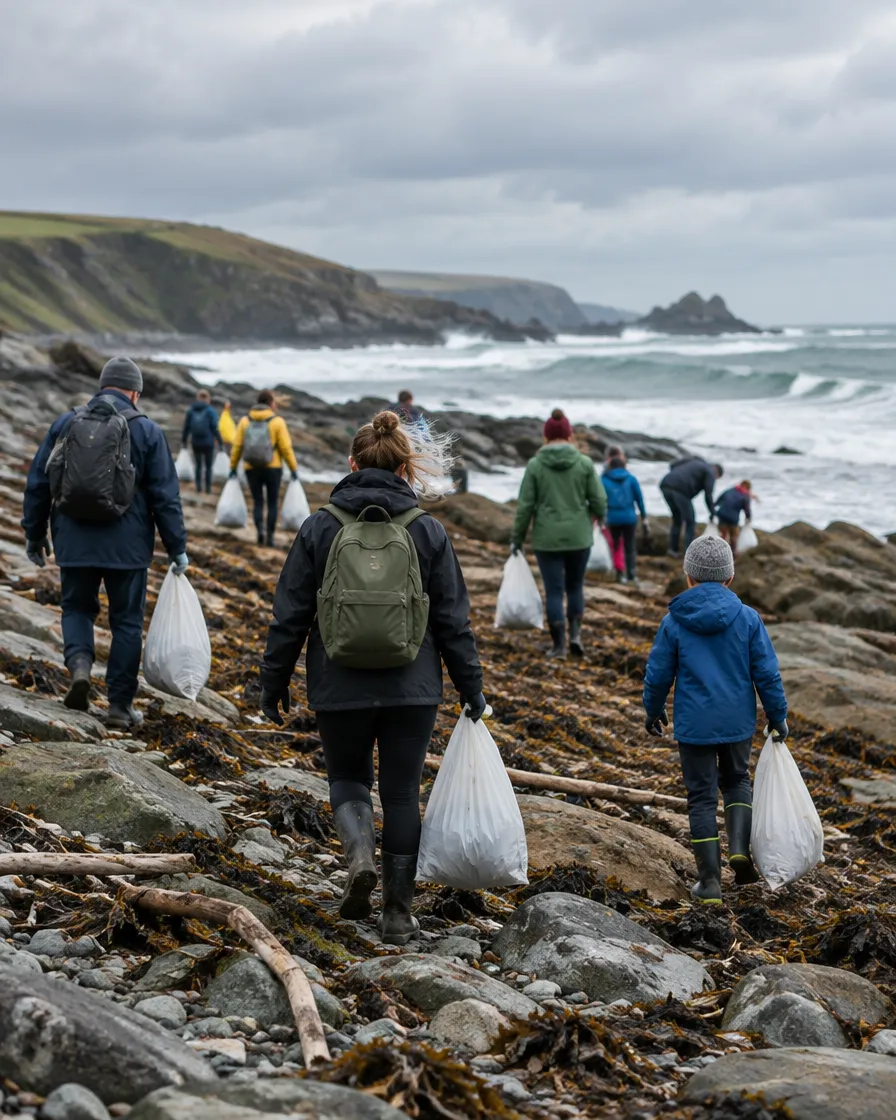
Halia One is a small solar robot that collects plastic from harbours and river mouths, quietly, every day. No investors, no shareholders. Just a harbour town, an engineer, two fishermen, and you.
Recycled plastic hulls, shaped with local boat builders. Stable in a harbour storm, light enough for two people to lift.
1.2 m² of panels. Halia runs on daylight alone and rests at night, like the harbour does.
A slow conveyor lifts floating plastic out of the water. Slow on purpose: fish swim away, plastic doesn't.
Two soft booms guide debris towards the belt. Designed with fishermen so they never trap wildlife.
Holds up to 150 kg. When it's full, Halia returns to the pier and a local crew empties it.
A camera and a beacon. Every boat can see Halia, and every backer can see what it collected today.
Two electric thrusters. Top speed is a walking pace, because the sea isn't in a hurry.
3.2 metres long. Built in Bergen. Open for any harbour in the world to build.
A machine that cleans the commons should belong to the commons. So Halia is funded by the people who live by the water, and answers only to them.
Every backer becomes a member of the Halia cooperative, with a say in where the next robot goes.
Every part is published. Any harbour, school or workshop can build its own Halia.
Fishermen are paid to look after the robots in the quiet season. The work stays in the town.
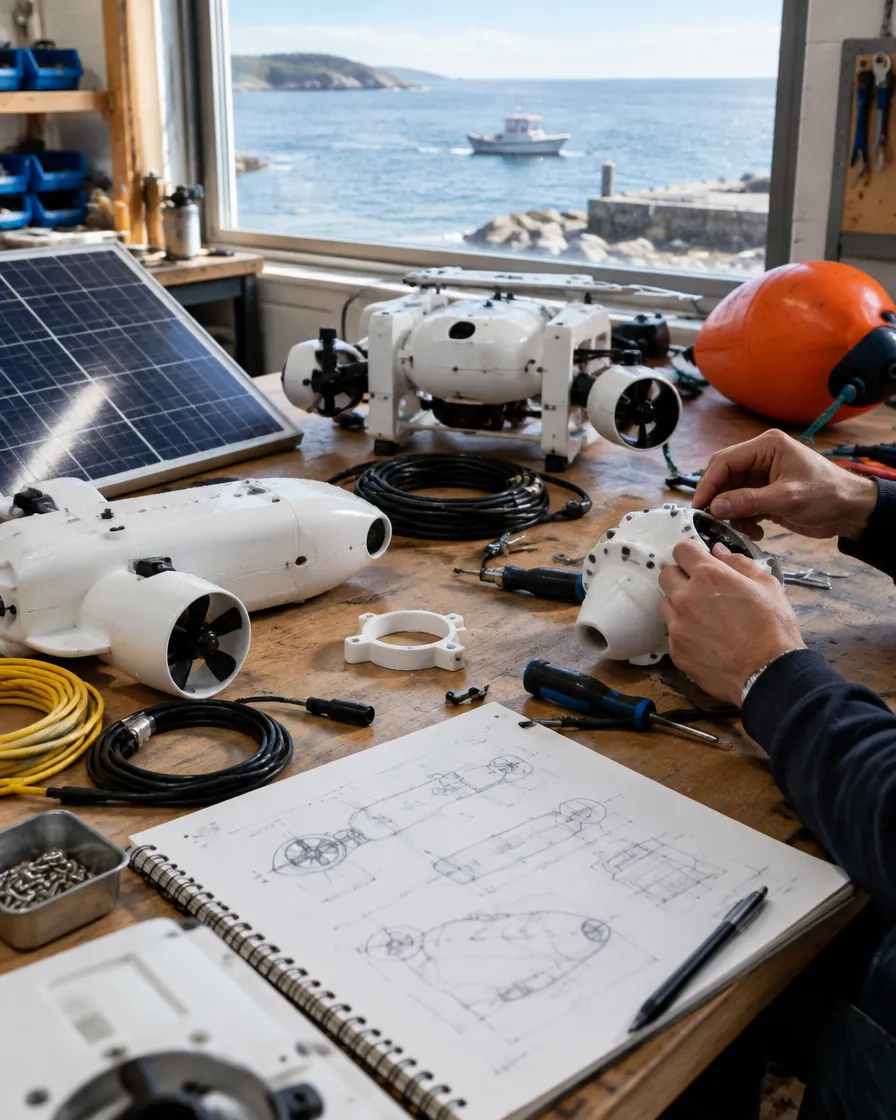
“I grew up on this pier. I'm building the thing I wished existed when I was ten.”
Mara Lindqvist, marine engineer and co-founder, with Ole and Sindre, who have fished these waters for thirty years.
Every amount matters, and every backer's name goes into Halia's logbook.
Your name in the logbook, and a photo of what Halia collected that week.
Engraved on a hull panel of the first robots, sailing in Bergen harbour.
Visit the workshop, meet the crew and join the first launch day.
For towns, schools and fishing communities that want a robot of their own.