mehrnova ← All studio work
Studio concept · ocean startup

The machine nobody could picture

Halia builds a small robot that cleans plastic from harbours, and wants to be funded by people, not investors. Their website explained it in jargon. This is how it became a machine people watch come together, and want to help build.

Imagined startup, real problem Inner → Interface Exploded 3D view
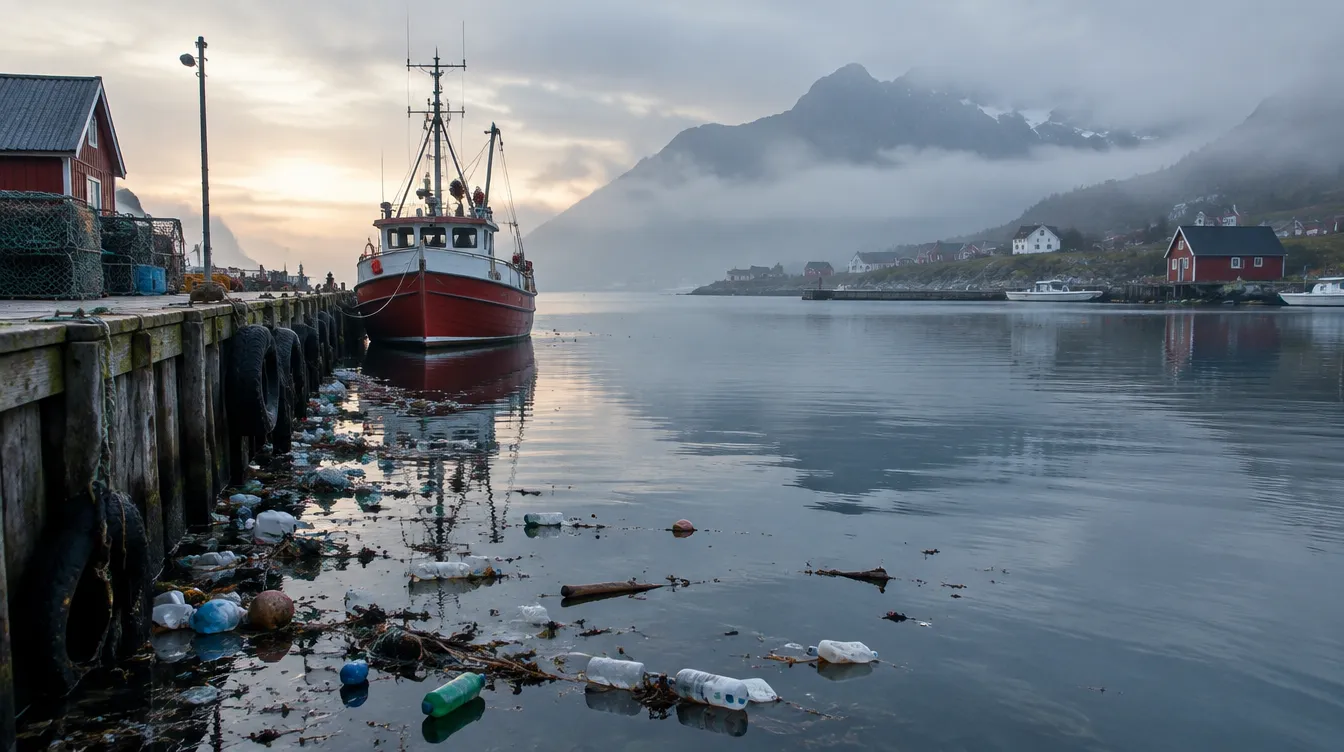
A Nordic fishing harbour at dawn with plastic floating along the pier
Who they are

Halia started on a pier near Bergen. Mara, 34, is a marine engineer who grew up there. Ole and Sindre have fished the same waters for thirty years and watched the plastic arrive. Together they built three prototypes of a solar robot that collects floating plastic. They don't want investors who expect returns from the sea. They want the people who live by the water to own it.

What felt wrong
“People ask what it does. I start talking about payloads and they look at their phones.”

Their website read like a pitch deck: "disruptive autonomous marine remediation", a page for investors, renderings nobody understood, and a donate button at the very bottom. Neighbours who wanted to help couldn't picture the machine, and didn't feel invited.

Proprietary autonomous payload architecture with scalable unit economics.

Before: written for investors, not for the people of the harbour.

A machine for the commons, explained to a boardroom.
What I heardStillness

Conversations with the three founders, and an afternoon on the pier talking to the neighbours who would fund it. Beneath the request for "a better donation page", three things came up.

People fund people, not machines.Nobody on the pier cared about specs. They cared that Ole and Sindre were behind it.
Seeing how it's built builds trust.When Mara showed the parts on her workbench, everyone understood the robot in two minutes.
Backing should feel like belonging.People wanted to be part of it, not to buy a perk.
The turning pointClarity

The sea belongs to everyone, so the machine should too.

From then on every decision was checked against it: does this invite people in, or keep them at a distance?

Finding the lookPlay

Before any colour or letter, I described Halia as a person. Every option was then held up against it: would a fisherman on the pier trust it, and would an engineer respect it?

HaliaMara, Ole and Sindre · a harbour town near Bergen
Hands-onHopefulTransparentIndependentCommunity-minded

“We'd rather owe the sea than a fund.”

Their world
Grey northern water · a red fishing boat · white parts on a workbench · orange life jackets · a pier full of neighbours

Three palettes I tried

Set asideStartup gradient

The colours of a pitch deck. It said "we want your investment", not "come and help".

Set asideEco green

Friendly, but it's the colour every green promise uses. It made a real machine look like a slogan.

ChosenDeep sea & signal orange

The real northern sea, and the orange of life jackets and harbour buoys. Orange appears only where a human should act: back the build.

Three type pairings I set

Halia TechnologiesDisrupting marine remediation.
Set asidePlus Jakarta Sans

Clean and modern, like every startup site. Nobody on the pier would remember it.

HaliaLet's save the ocean together!
Set asideNunito

Warm, but too soft. It made serious engineering look like a children's campaign.

Built by people who love the sea.01 / FLOATS · RECYCLED HDPE
ChosenArchivo Expanded + IBM Plex Mono

Wide, sturdy letters like the lettering on a boat hull, and mono labels like an engineer's drawing. Honest about being a machine, warm about the people.

The result feels like an engineer's logbook by the harbour: deep sea for the machine, foam white for the people, and orange only where you're invited to act.
How it took formForm

Watch it come together

From "seeing how it's built builds trust". An exploded 3D view: as you scroll, the floats, deck, belt, arms, basket, mast and thrusters fly into place, each with one plain sentence about what it does.

People before the machine

From "people fund people". The first words are about who builds it and who funds it. The founders' faces and voices come before any spec.

Backing as belonging

From "backing should feel like belonging". Every backer joins the cooperative, and can have their name engraved on a float of the first robots.

Plain words, open drawings

From "the sea belongs to everyone". No jargon: "Top speed is a walking pace." And every drawing is published, so any harbour can build its own.

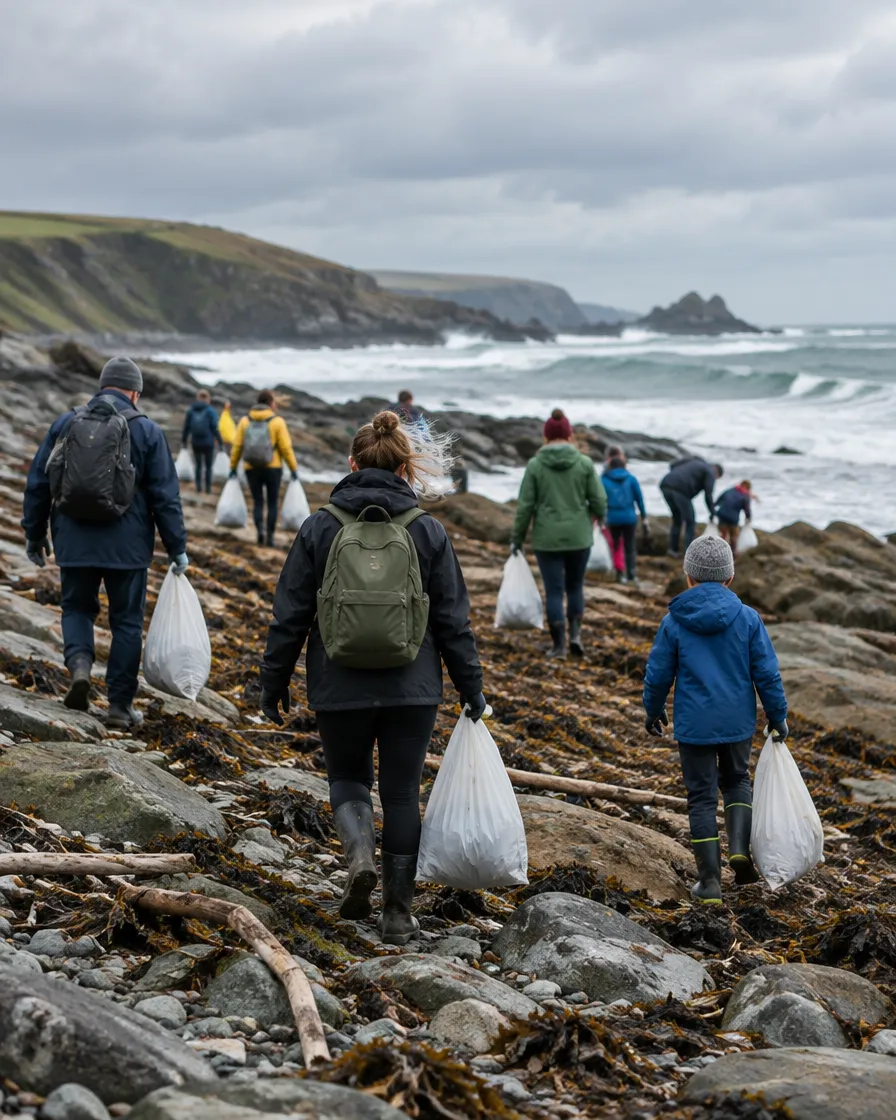
Neighbours carrying bags of collected plastic along a rocky coast
The people who fund Halia are the people who clean the coast already.
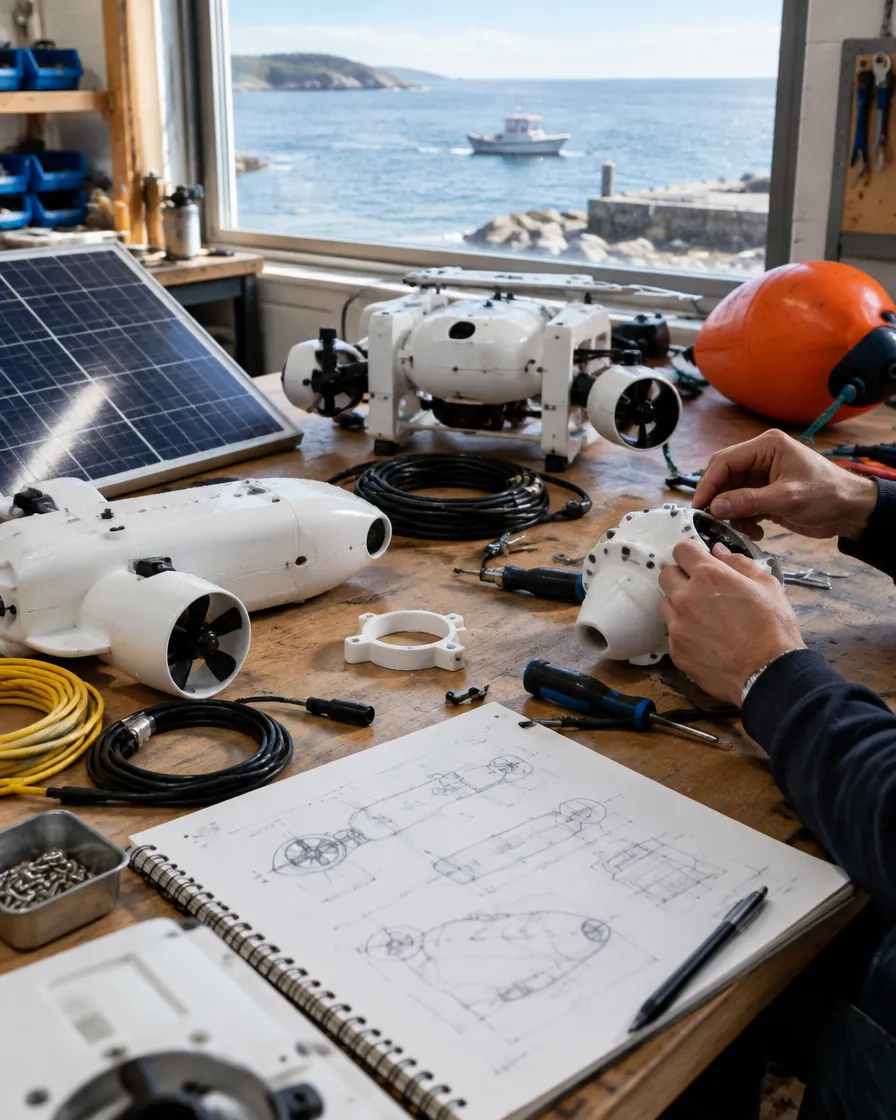
A workbench with white robot parts, an orange float and sketches
The workbench became the website: real parts, explained one at a time.
What changedFlow
BeforeAfter
A neighbour feels"This is for investors.""This is ours. I want to help."
The robot reads asA rendering and a spec sheetSeven parts anyone can understand
Mara feels when sharing the linkShe explains it again in person"Just scroll, you'll see."
Backing feels likeA donation at the bottom of a pageJoining a crew

Because this is a concept, there are no real figures. In a real project I would test it with ten neighbours from the pier and follow how many scroll through the whole assembly, and how many become backers.

Walk through it

Halia

The finished concept site. Scroll through the exploded view and watch the robot come together, part by part.

and you?

Your mission deserves to be understood.

Every project starts by listening until the one true sentence appears. Three Clarity Sessions are the gentlest way to begin.