Navid writes essays that ask people to slow down. His website asked them to click everything. This is how it became four quiet rooms.
Imagined person, real problemInner → InterfaceWebsite for an intellectual brand
Who he is
Navid is 52. He taught ethics at a university for fifteen years, then left to write for people outside academia. He has published one book of essays, writes a letter every second Sunday, and is invited more and more often to speak at small festivals and companies.
What felt wrong
“My work asks people to slow down. My website asks them to click on forty things.”
His site had grown like a drawer: a blog with tags, a sidebar of popular posts, a newsletter pop-up after five seconds, and a speaking page with a fee table. New readers didn't know where to begin. It looked like the site of a productivity expert, which is the opposite of what he is.
Before: everything at once, nothing to start with.
A quiet mind, presented in a loud room.
What I heardStillness
Three conversations with Navid and five short calls with his long-time readers. Beneath the request for "a cleaner blog", three things came up.
Readers fall in love with one essay.Almost every loyal reader started with the same long piece. Then they got lost in the archive.
He is a companion, not an expert.He doesn't sell answers. He asks better questions, and keeps people company while they think.
Invitations follow deep reading.The people who invite him to speak have read something long. Nobody books him from a fee table.
The turning pointClarity
Thinking is a room you enter, not a feed you scroll.
The website stopped being an archive and became a house with a few rooms. Each room has one purpose, and the visitor always knows where they are.
Finding the lookPlay
Before any colour or letter, I described Navid as a person. Every option was then held up against him: would a long-time reader recognise him in it?
Navid, 52Philosopher and essayist · former ethics lecturer
PreciseWarm but privateUnhurriedAllergic to hype
“I don't want to be followed. I want to be read.”
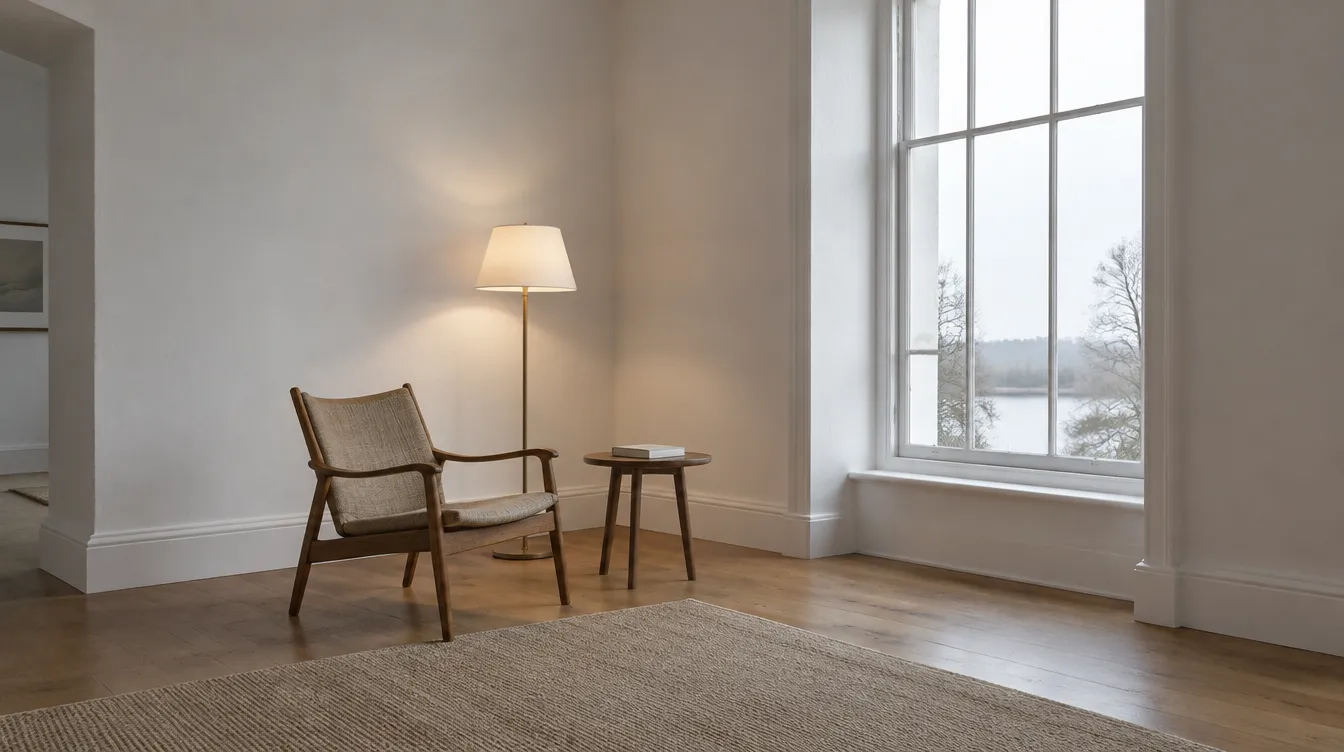
His world A reading room at dusk · limestone · a walnut desk · one lamp switched on
Three palettes I tried
Set asideAcademic navy
It looked like a university or a consultancy. Authority, where he wants companionship.
Set asideNight mode
The look of tech thinkers and productivity apps: exactly the noise he writes against.
ChosenLimestone, walnut & oxblood
A reading room at dusk. Warm enough to stay, serious enough to think. Oxblood marks the room numbers, brass the lamp.
Three type pairings I set
Rooms of AttentionThinking is a room you enter.
Set asideEB Garamond
Beautiful in print, but it felt like an old library: nostalgic rather than present.
Rooms of AttentionThinking is a room you enter.
Set asideSpace Mono + Work Sans
Clever and modern, but it made essays look like code.
Rooms of AttentionROOM I · THE FIRST ROOM
ChosenNewsreader + Schibsted Grotesk
Newsreader was drawn for long reading on screens. Schibsted Grotesk works like the signs on doors: small, clear, quiet.
The result reads like a house, not a feed: lots of wall, one object per room, and words given the space they need.
How it took formForm
Four rooms instead of forty links
From "then they got lost". The First Room, the Library, the Letter Room and the Conversation Room. Nothing else in the menu.
One essay to begin with
From "readers fall in love with one essay". The First Room holds that one piece, with its reading time and a quiet reading view.
Quiet rooms instead of a portrait
From "a companion, not an expert". The homepage shows spaces to think in, not a speaker on stage. His photo waits on the About page.
The invitation lives after the essay
From "invitations follow deep reading". At the end of each essay: "If this stayed with you, invite Navid to think aloud with your people." The fee table is gone.
The Library: one book, given the space of a whole room.The Letter Room: letters written by hand first, sent every second Sunday.
What changedFlow
Before
After
A new reader feels
"Where do I start?"
"I'll read this one, slowly."
Navid reads as
Another productivity voice
A thinker worth spending an evening with
Navid feels when sharing the link
He apologises for the pop-up
"Come in, this is where I think."
Speaking invitations come
From a fee table, rarely
From readers who were moved
Because this is a concept, there are no real figures. In a real project I would follow how many visitors finish the first essay, how many subscribe after it, and where speaking invitations come from.
Walk through it
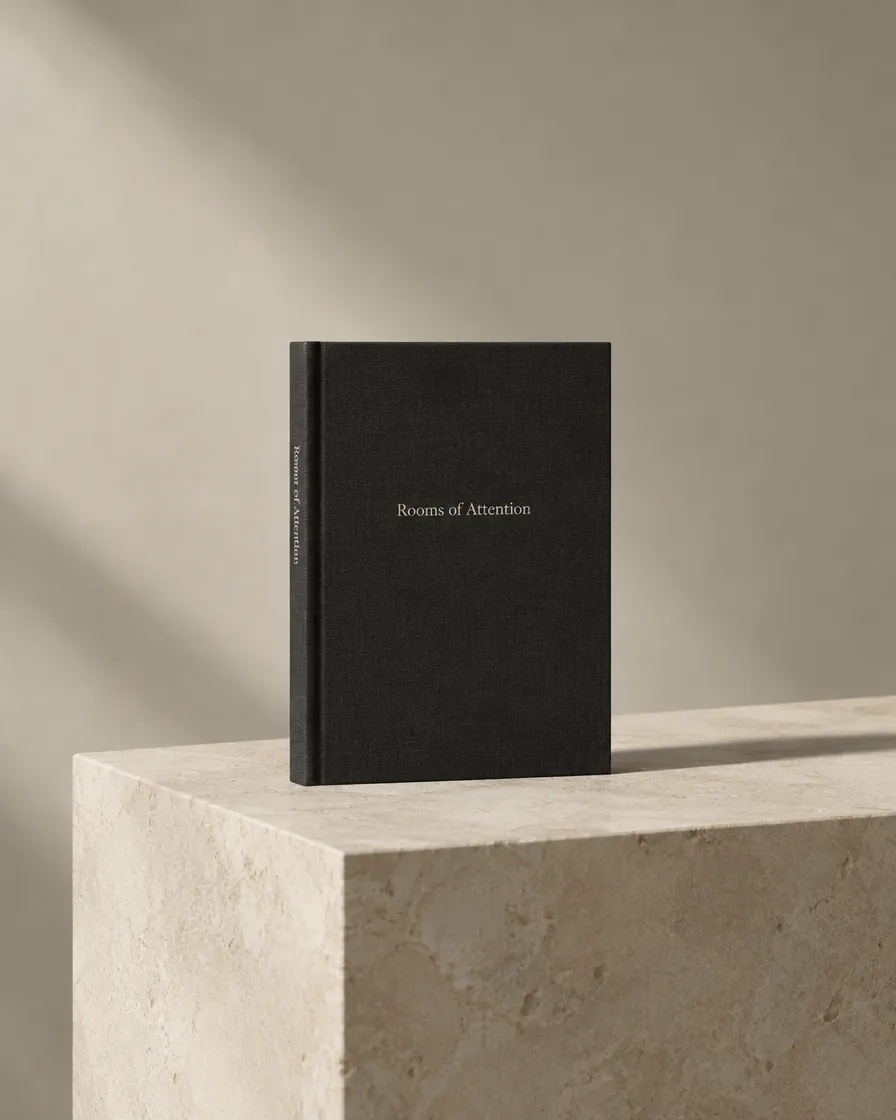
Rooms of Attention
The finished concept site. Enter the First Room, read the opening of the essay, and see how a website can feel like a quiet house.